






Few money moments feel more confusing than seeing a healthy bank balance while the card reader flashes “declined.” I have been there—checking my banking app twice and wondering, “Why was my debit card declined with money in the account?”
The answer is often hidden behind available-balance rules, merchant holds, fraud filters, daily spending limits, or a simple card setting. In this guide, I will uncover the most likely causes, explain what to check first, and show you how to get your debit card working again quickly.
Why Does My Debit Card Decline When My Balance Looks High?
Banks do not approve purchases using the current balance alone. They also check the available balance, linked account, card status, transaction limits, and recent activity. Open your bank or credit union app and review pending charges, card controls, and fraud alerts first.
Is Your Available Balance Lower Than Your Current Balance?
Your current balance may include money you cannot spend yet. A deposited check can appear before all funds clear, while pending debit purchases, ACH payments, checks, and ATM withdrawals reduce what is immediately available.
A $900 current balance can fall to $450 after a $300 hotel hold and a $150 pending purchase. A $500 payment would then fail. Also confirm the money is in the correct account. Most US debit cards draw from checking, so savings may not cover the purchase without a transfer or eligible overdraft protection.
Did a Hotel, Gas Station, or Rental Company Place a Hold?
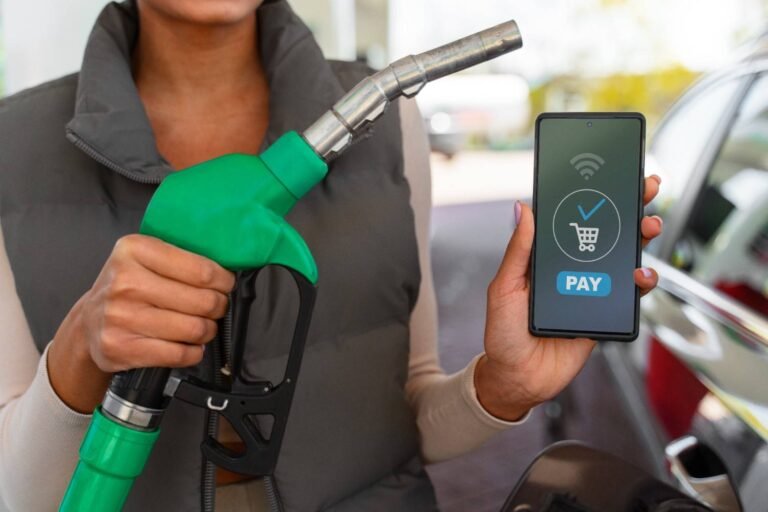
Hotels, rental car agencies, gas stations, and some restaurants use preauthorization holds to estimate the final bill. This immediately lowers your available balance.
Paying inside a gas station for a fixed amount may avoid a larger pump hold. At a hotel or rental counter, ask how much will be held and when it should be released. Paying the final bill with the same card may help replace the hold faster.
Did You Reach a Daily Purchase or ATM Limit?
US banks and credit unions commonly set daily purchase and ATM withdrawal limits. A large balance does not override the cap, and several smaller transactions can use up the allowance.
Check your app or call the issuer before an expensive purchase. Some institutions allow temporary increases. Avoid repeatedly retrying a declined payment because multiple attempts can trigger another security block.
Did Your Bank Flag the Payment as Possible Fraud?
A large purchase, unfamiliar merchant, overseas website, rapid charges, or spending far from your usual location can activate fraud controls. The bank may block the transaction until you confirm it.
Check for an in-app alert, text, email, or push notification, and approve only activity you recognize. Travel policies vary, so review your issuer’s current process and keep your contact details updated. Some banks still accept travel notices, while others rely on automatic fraud monitoring.
Is the Card Locked, Inactive, Expired, or Damaged?

Your card may be locked in the app. Online purchases, international use, contactless payments, and ATM access may also have separate controls.
New and replacement cards usually require activation. Confirm the expiration date and use the replacement rather than the old card. A damaged chip or contactless antenna can also cause a decline, so try inserting instead of tapping or use a supported digital wallet.
Did You Enter the Wrong PIN or Billing Information?
Online payments may fail because of an incorrect card number, CVV (card security code), expiration date, billing ZIP code, or address. The billing information should match the issuer’s records even when the shipping address differs.
At an ATM or terminal, the wrong PIN causes an immediate decline. Repeated mistakes may lock the card, so contact the issuer instead of continuing to guess.
Is the Merchant or Payment Network Having a Problem?
If your card works elsewhere, the store may have a terminal failure, internet outage, processor problem, or card-network restriction. Ask the cashier to try another terminal or insert the chip instead of tapping.
When the card fails only at one business, use another payment method and confirm whether the issue is merchant-specific before replacing the card.
What Should I Do Immediately After a Debit Card Decline?
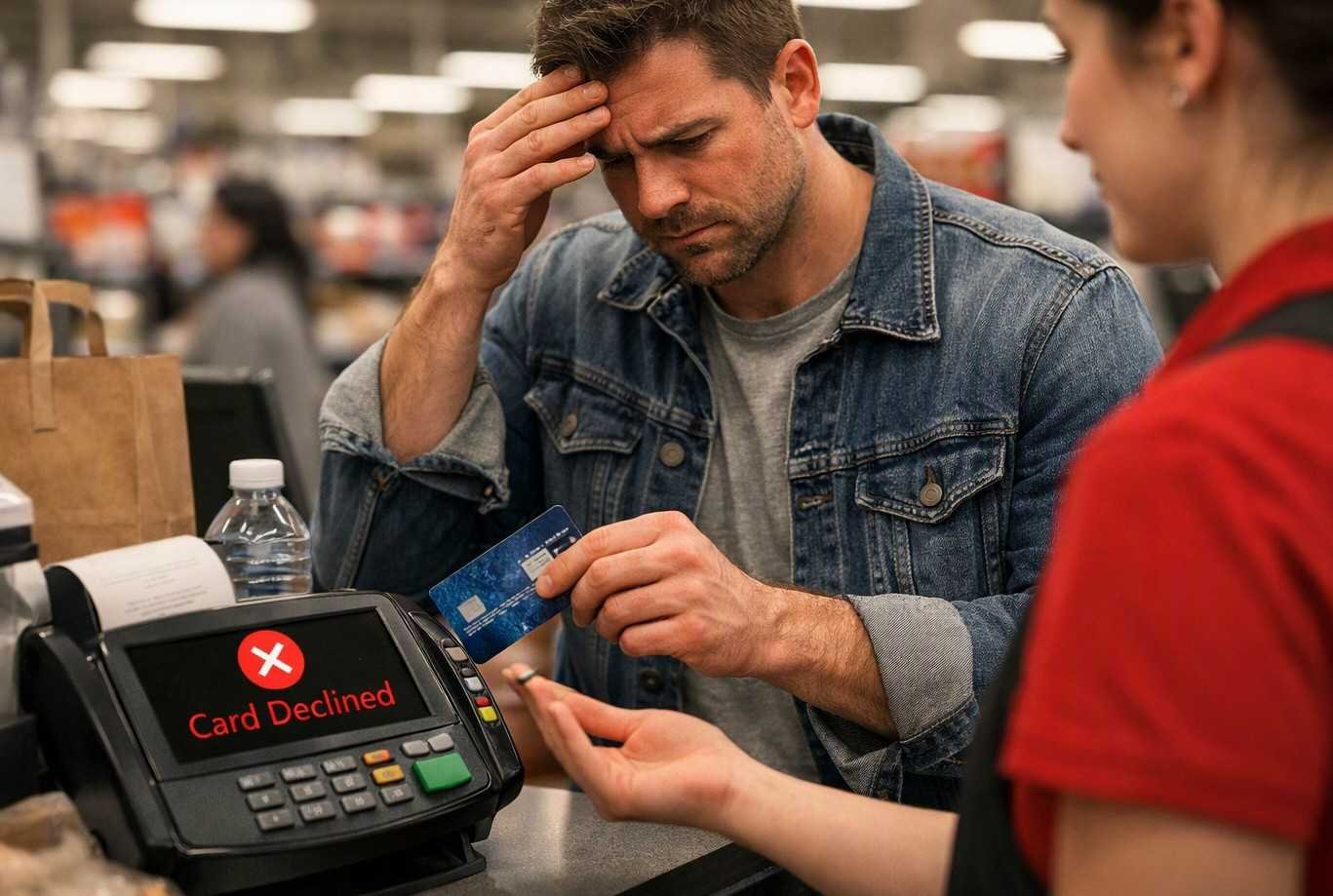
Check the available balance, linked account, pending activity, merchant holds, daily limits, activation, expiration, and card controls. Make sure online or international transactions are enabled when relevant.
Then review fraud alerts and recheck the PIN or payment details. If the cause remains unclear, call the official number on the card or in the banking app. A representative can read the transaction’s decline code, explain the exact problem, and potentially unblock the card.
Never call a number from an unexpected “card declined” message or share a one-time passcode. Use cash or a backup card if the purchase cannot wait.
How Can I Prevent Another Debit Card Decline?
I monitor my available balance, check pending payments before a major purchase, and enable alerts for low funds, unusual activity, card charges, and deposit availability. These habits are part of the basics of personal finance because they help prevent declined transactions, overdrafts, and unexpected account disruptions.
Keep your contact details current, activate replacement cards promptly, review spending limits, and check travel or international-use settings. A backup payment method can prevent a temporary bank or merchant issue from disrupting an essential purchase.
Frequently Asked Questions (FAQs)
1. Why Was My Debit Card Declined at an ATM?
You may have exceeded the withdrawal limit, entered the wrong PIN, selected an account without enough available funds, or used an incompatible ATM.
2. Why Does My Debit Card Work in Stores but Not Online?
Online transactions may be disabled, or the CVV, expiration date, billing address, or ZIP code may not match the issuer’s records.
3. How Long Can a Debit Card Authorization Hold Last?
Timing depends on the merchant and issuer. Ask when the funds should become available again, especially after using your card at a hotel, gas station, or rental company.
4. Can a Bank Decline a Purchase Despite Overdraft Protection?
Yes. Overdraft service does not require a bank or credit union to approve every transaction that would overdraw the account.
The Bottom Line
The next time I wonder, “why was my debit card declined with money in account,” I check the available balance, linked checking account, holds, fraud alerts, card settings, and daily limits. Most declines come from a temporary authorization, security decision, account mismatch, incorrect payment detail, or technical failure—not missing money.
If the app does not reveal the cause, the issuer can review the decline code and identify the fastest fix.