







A missed bill often starts with scattered dates, unclear balances, or a system that depends on memory. When people ask me how to organize monthly bills and due dates, I recommend one rule: every bill needs one home, one payment date, and one funding source.
The goal is not to build a complicated budget. You need a repeatable process that shows what is due, when to pay it, and whether the money is available.
Build One Complete Bill List
Collect every recurring obligation from bank statements, credit card statements, email receipts, paper mail, and subscription accounts. Consumer.gov recommends gathering bills and pay stubs, then listing expenses and monthly income before building a budget.
Record the provider, official due date, usual amount, payment method, and account used for payment. For variable bills, enter a safe planning amount rather than an optimistic average.
For example, suppose your electricity bills recently ranged from $90 to $145. I would budget $150. That small cushion prevents a higher seasonal bill from disrupting the rest of the month.
Include annual and irregular costs as well. Car registration, insurance renewals, school fees, memberships, and property taxes can damage a monthly plan because they remain invisible until they arrive.
Divide each yearly expense by 12 and save that amount every month. A $600 annual insurance premium becomes a manageable $50 monthly contribution.
Create a Working Bill Calendar
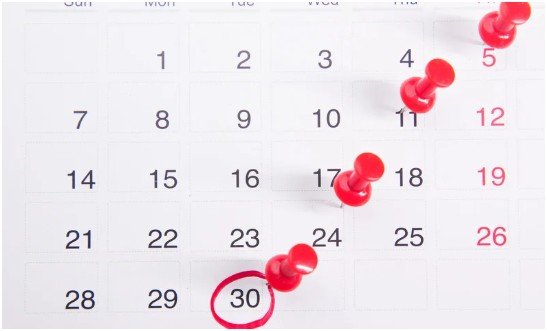
A due date tells you the deadline. A payment date tells you when to act. Your tracking system should display both.
You can use a spreadsheet, budgeting app, digital calendar, or physical planner. The best option is the one you will check consistently. Avoid maintaining several incomplete trackers.
Schedule Payment Dates
The CFPB bill calendar suggests scheduling mailed payments seven days before the deadline and online payments three days early. I place the planned payment date on my calendar while keeping the official due date in a separate field.
This change makes how to organize monthly bills and due dates far more practical. Your tracker becomes an action plan instead of a collection of deadlines.
Credit card payments require extra attention. Federal rules generally require the due date to fall on the same numerical day each month. The CFPB also says issuers generally cannot treat a payment as late when it arrives by 5 p.m. on the due date, subject to the stated time zone and holiday rules.
Paying earlier remains safer. Bank processing delays, incorrect account details, or technical problems can turn a last-minute payment into a late one.
Calculate Your Bill Runway
My original “bill runway” method shows how much money is truly available before the next paycheck.
Bill runway = available checking balance − bills due before the next paycheck
Suppose your checking account holds $1,450. Before your next deposit, you must pay $900 in rent, $120 for insurance, and $80 for internet.
Your bill runway is:
$1,450 − $1,100 = $350
Although the account shows $1,450, only $350 is available for groceries, gasoline, and other flexible expenses. The remaining money already belongs to upcoming bills.
This calculation prevents one of the most common budgeting mistakes: treating the displayed bank balance as spendable cash.
Match Bills to Paychecks
Assign every bill to the paycheck that will fund it. This method works well for households paid weekly, biweekly, or twice monthly.
Bills due during the first half of the month can come from the first paycheck or the previous month’s final deposit. Bills due later can come from the second paycheck.
Worked Paycheck Example
Assume your take-home pay is $1,800 on the 1st and another $1,800 on the 15th.
Your first paycheck covers:
Rent: $1,100
Insurance: $140
Phone service: $70
Subscriptions: $35
The total is $1,345, leaving $455.
Your second paycheck covers:
Car payment: $360
Credit card payment: $250
Utilities: $220
Internet: $80
The total is $910, leaving $890.
This example reveals that the first pay period carries much more pressure. You could reserve part of the second paycheck for next month’s rent, move money into a separate bills account, or request a different due date.
That is the difference between listing expenses and understanding how to organize monthly bills and due dates around real cash flow.
Automate Bills Safely

Automation can prevent missed payments, but it should never make your bills invisible.
Start by automating predictable expenses such as rent, insurance, internet service, loan payments, and subscriptions. Review variable utility and credit card balances before they leave your account.
The CFPB explains that automatic debits may cover fixed amounts or variable amounts within an authorized range. Companies generally must provide advance notice when a scheduled amount changes beyond the agreed terms.
Keep alerts active after enabling autopay. A notification three days before withdrawal gives you time to review the amount and confirm that enough money is available.
A separate checking account can also simplify bill management. Transfer the required amount after each paycheck and use that account only for scheduled obligations.
Keep a small buffer whenever possible. The CFPB warns that insufficient balances during automatic debits can cause overdraft fees and additional charges from the billing company.
Autopay reduces memory errors. It does not catch duplicate transactions, expired payment cards, unexpected price increases, or canceled subscriptions that continue billing. Review the account regularly.
Change Problem Due Dates
Several large bills may arrive within the same week while your paycheck lands several days later. You do not always have to accept that schedule.
Contact the provider and request a different due date. The CFPB provides a worksheet designed to help consumers organize bill schedules and request due-date changes.
Credit card issuers, lenders, utilities, insurance companies, and service providers may offer this option. Individual policies vary, so confirm whether the change affects the current or following billing cycle.
Choose a date two or three days after your income normally arrives. Deposits can be delayed by weekends, federal holidays, payroll errors, or bank processing.
Do not treat a credit card grace period as extra time after the payment deadline. It generally describes the period between the end of the billing cycle and the payment due date.
Keep a 15-Minute Bill Routine
Set a recurring bill appointment every week or every two weeks. Fifteen focused minutes is usually enough once the system is established.
During each session, check upcoming payment dates, review variable statements, confirm autopay balances, and mark completed transactions.
Use separate payment statuses:
Scheduled means you submitted the payment.
Processed means the provider received it.
Cleared means the money left your account successfully.
This distinction helps you catch failed or delayed transactions before they become missed payments.
Keep digital statements in one email folder and paper bills in one physical tray. At the end of each month, compare estimated amounts with actual charges. Update utility estimates and remove canceled services.
Most importantly, do not spend according to the displayed checking balance. Use the bill runway. Money reserved for next week’s rent is not available today.
Frequently Asked Questions
1. What is the easiest way to track monthly bills?
Use one calendar that records each bill’s payment date, official due date, expected amount, payment method, and cleared status.
2. How do I organize bills around two paychecks?
Assign each bill to the paycheck arriving before its payment date, then reserve money from the lighter pay period for larger upcoming expenses.
3. Should every monthly bill be placed on autopay?
No. Automate predictable bills first while reviewing variable charges and keeping enough money available to prevent failed payments or overdrafts.
4. How often should I review my bill calendar?
Review it weekly or every two weeks, followed by a month-end check to update amounts, identify price changes, and remove canceled services.
Your Bills Do Not Get to Run the House
Learning how to organize monthly bills and due dates comes down to visibility, timing, and protecting money that already has a job.
Build one complete list. Schedule payments before their deadlines. Assign every bill to a paycheck. Automate predictable expenses and calculate your bill runway before making optional purchases.
My strongest next step is simple: open your latest bank statement and create your master bill list today. Once every obligation has a place, managing bills becomes routine maintenance instead of monthly chaos.